Eye Floaters Overview: Explore Basics, Causes, Facts, and Helpful Information
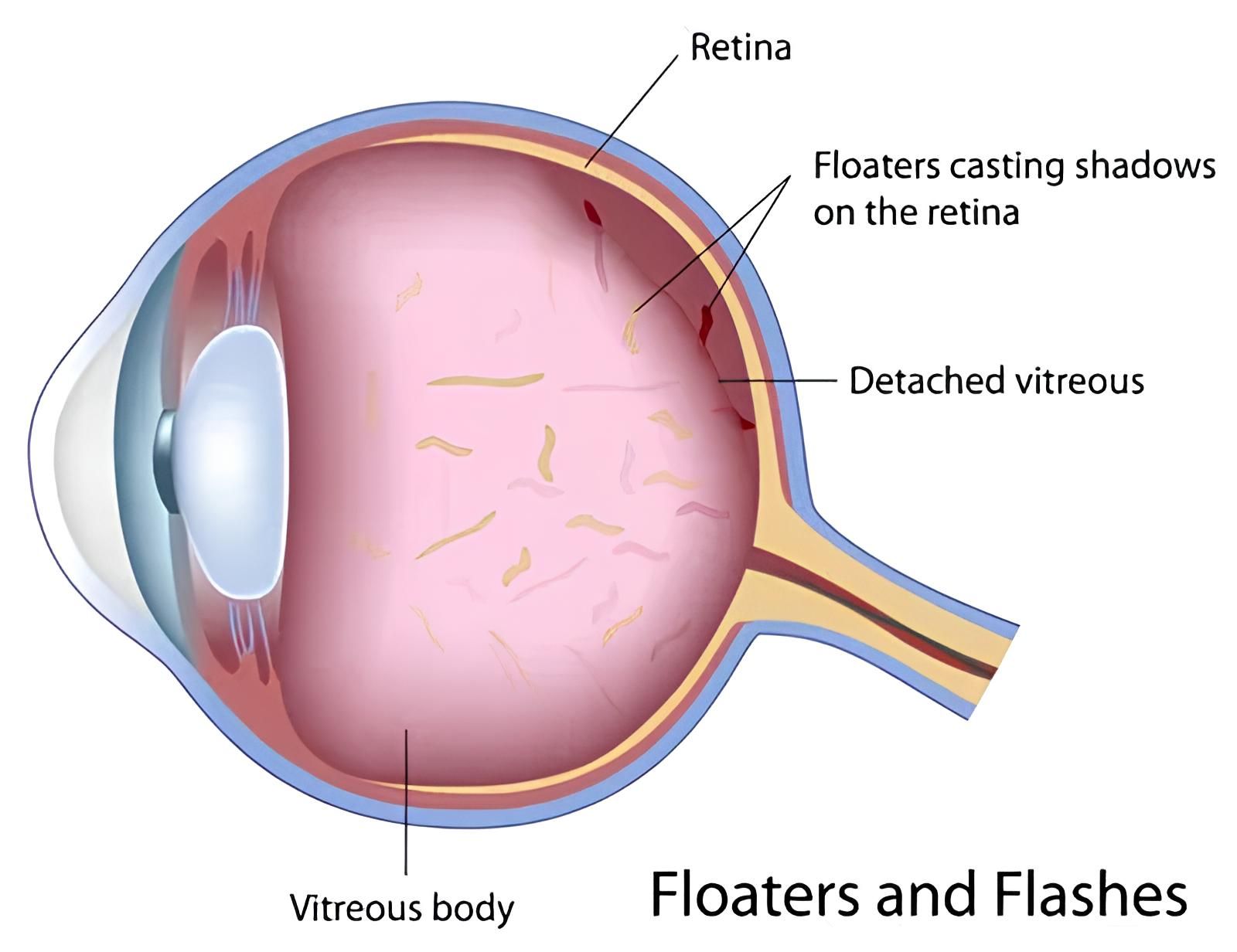
Eye floaters are small shapes or specks that appear to drift across a person’s field of vision. They may look like dots, threads, or cobweb-like strands, especially when looking at a bright background such as a clear sky or a white wall. These visual disturbances are usually linked to changes inside the eye’s vitreous, a gel-like substance that fills the space between the lens and the retina.
As people age, the vitreous gradually becomes more liquid and can form tiny clumps or fibers. These cast shadows on the retina, which are perceived as floaters. While many individuals experience them at some point, their frequency and visibility can vary.
For those with persistent or bothersome floaters, several medical approaches exist. These include vitrectomy for eye floaters, eye floater laser treatment, and other forms of eye floater surgery. In such cases, evaluation by a retina specialist for eye floaters is often part of the diagnostic process.
Importance
Eye floaters are common, but their impact differs widely. For some, they are a minor inconvenience. For others, they may interfere with daily tasks such as reading, driving, or working on screens.
Several groups may be more likely to notice or be affected by floaters. These include individuals with age-related eye changes, those who are nearsighted, and people who have experienced eye injuries or previous eye procedures.
Understanding floaters is important because they can sometimes signal underlying eye conditions. While most floaters are harmless, a sudden increase in floaters, especially when combined with flashes of light, may indicate a retinal issue that requires attention.
From a broader perspective, awareness helps individuals distinguish between normal age-related changes and symptoms that may need medical evaluation. This is particularly relevant in an era where screen use and visual demands are increasing.
Recent Updates
In recent years, there has been growing interest in improving how eye floaters are managed. Advances between 2024 and 2026 have focused on refining existing treatments and improving patient selection criteria.
One area of development involves vitrectomy for eye floaters. This procedure, which removes the vitreous gel and replaces it with a clear solution, has seen improvements in surgical techniques. These changes aim to reduce recovery time and minimize complications.
Eye floater laser treatment has also gained attention. This approach uses laser energy to break up larger floaters into smaller, less noticeable fragments. While not suitable for all types of floaters, ongoing research is examining its effectiveness for specific cases.
Another trend is the use of imaging technology. High-resolution retinal scans help retina specialists for eye floaters better assess the size, location, and density of floaters. This supports more informed decisions about whether eye floater removal surgery is appropriate.
Overall, the trend reflects a shift toward personalized care, where treatment decisions are based on individual symptoms, eye structure, and risk factors.
Laws or Policies
Eye care practices, including procedures like eye floater surgery, are regulated by national and regional health authorities. These regulations aim to ensure patient safety, proper training of medical professionals, and adherence to clinical standards.
In many countries, ophthalmologists must meet licensing requirements and follow established guidelines when performing procedures such as vitrectomy for eye floaters. These guidelines often include:
- Patient evaluation protocols, ensuring that surgery is only considered when floaters significantly affect vision
- Informed consent processes, where risks and expected outcomes are clearly explained
- Equipment and facility standards, ensuring that procedures are carried out in appropriate clinical environments
Health systems may also define when procedures are considered medically necessary. For example, eye floater removal surgery may be evaluated differently depending on whether symptoms are mild or significantly impair vision.
In addition, reporting systems may track outcomes and complications, contributing to ongoing improvements in clinical practice.
Tools and Resources
Several tools and resources can help individuals understand and monitor eye floaters.
Educational Websites
Reliable health information platforms provide detailed explanations of eye conditions. These resources often include diagrams, videos, and symptom checklists that help users identify when floaters may require attention.
Vision Monitoring Tools
Simple tools can help track changes in vision over time. These include:
- Amsler grid charts, used to detect distortions in central vision
- Mobile applications designed for vision tracking, allowing users to record symptoms and changes
- Digital reminders for regular eye check-ups
Clinical Imaging
Eye care professionals use imaging tools to assess floaters and overall eye health. Common methods include:
- Optical coherence tomography (OCT), which provides detailed cross-sectional images of the retina
- Ultrasound imaging, used when floaters are dense or difficult to visualize
Comparison of Common Treatment Options
| Treatment Type | Description | Suitable For | Key Considerations |
|---|---|---|---|
| Observation | Monitoring without intervention | Mild or occasional floaters | Often no immediate action required |
| Eye floater laser treatment | Laser breaks floaters into smaller fragments | Specific types of floaters | Not effective for all cases |
| Vitrectomy for eye floaters | Removal of vitreous gel and replacement with fluid | Severe, persistent floaters | Involves surgical procedure |
| Eye floater removal surgery | General term for surgical approaches including vitrectomy | Significant visual disturbance | Requires evaluation by a specialist |
These tools and resources support informed discussions between patients and eye care professionals.
FAQs
What causes eye floaters to appear suddenly?
A sudden increase in floaters can occur when the vitreous gel pulls away from the retina, a process known as posterior vitreous detachment. In some cases, it may also be associated with retinal tears or other conditions, which should be evaluated by an eye specialist.
Is vitrectomy for eye floaters safe?
Vitrectomy for eye floaters is a well-established procedure, but like any surgery, it carries risks. These may include infection, retinal detachment, or changes in eye pressure. A retina specialist for eye floaters evaluates whether the potential benefits outweigh the risks for each individual.
How does eye floater laser treatment work?
Eye floater laser treatment uses targeted laser energy to break larger floaters into smaller pieces. This can make them less noticeable. The procedure is typically considered for specific types of floaters that are clearly visible and located away from sensitive eye structures.
When is eye floater removal surgery recommended?
Eye floater removal surgery may be considered when floaters significantly interfere with daily activities such as reading or driving. A detailed eye examination helps determine whether surgery is appropriate based on the size, location, and impact of the floaters.
Do I need a retina specialist for eye floaters?
A retina specialist for eye floaters is often consulted when symptoms are persistent, severe, or accompanied by other visual changes. These specialists have advanced training in diagnosing and managing conditions affecting the retina and vitreous.
Conclusion
Eye floaters are a common visual phenomenon linked to natural changes in the eye. While many cases are harmless, understanding their causes and potential implications helps individuals respond appropriately to changes in vision. Advances in diagnostic tools and treatment options have improved how floaters are evaluated and managed. Approaches such as vitrectomy for eye floaters and eye floater laser treatment are available for selected cases. Awareness and regular eye examinations remain key to maintaining overall eye health.
Disclaimer: The information provided in this article is for informational purposes only. We do not make any claims or guarantees regarding the accuracy, reliability, or completeness of the information presented. The content is not intended as professional advice and should not be relied upon as such. Readers are encouraged to conduct their own research and consult with appropriate professionals before making any decisions based on the information provided in this article.